
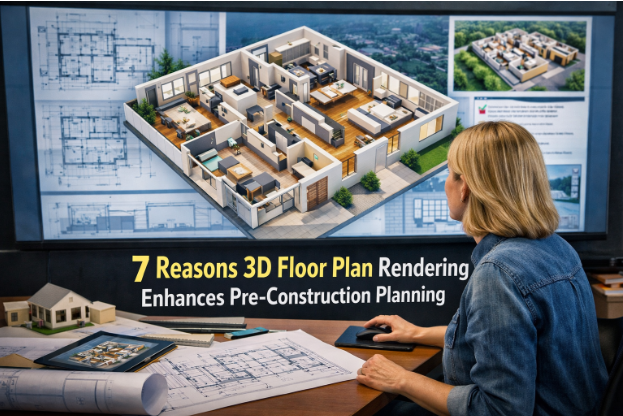
Pre-construction planning provides the groundwork for the success of any architectural and real estate development project. The nature of the decisions being made in pre-construction planning has far-reaching implications in terms of cost control, timelines, detail accuracy, and overall viability.
Yet, being dependent on technical drawings and two-dimensional plans may sometimes present areas of misinterpretation and changes down the line. This has led to the importance of three-dimensional floor plan rendering in pre-construction planning.
In this way, abstract designs can more easily translate into doable visual presentations, allowing a project team to achieve a clear understanding of space, functionality, and design, all before actual construction work takes place.
In addition, having a professional 3D architectural visualization company at their side, project teams can benefit from faster planning and a reduced level of risks associated with projects. In this respect, there are seven important reasons why 3D floor plans are so important during pre-construction planning.
1. Effective Visualization of Space Layouts Right from the Beginning
Among the difficulties that may arise during pre-construction planning is understanding the look and feel of the spaces created by construction. Technical drawings may not be easily understood by non-experts, delaying decisions made during this stage.
The 3D floor plan rendering is used for the representation of the layout in a very realistic and understandable way. The rooms, walls, doors, and path of circulation in the building become easier to understand. This is very beneficial for the stakeholders to understand the whole layout.
2. Enhanced Accuracy Before Actual Construction Work
A small error in design might create significant construction problems if the error is overlooked. A three-dimensional view will help the team evaluate the layout accurately before the design is locked.
In creating visual representations of proportions, clearance, and relationships between rooms, inconsistencies may be seen that could be difficult to determine within two-dimensional drawings. Such accuracy is crucial in ensuring that a design is ready for construction and meets reality.
3. Smarter Decision Making and Approvals
Phases prior to the act of construction may stall because there is an unclear identity of what is being approved. This visual obscurity causes delays.
Realistic graphics make it possible for 3D floor plan rendering to ensure that the concerned person or persons have clear expectations about the floor plan, which further helps in avoiding delays in approvals or implementation.
4. Improved Coordination Between Teams for Projects
Pre-construction planning involves all participants, including architects, engineers, contractors, and clients, while miscommunication between these parties can often create conflicts of design.
A professional 3D architectural visualizing firm can provide images that serve as a common point of reference for all parties. This way, all people reference the same image, and it enhances coordination and communication of design intentions.
5. Early Identification of Functional and Flow Problems
Issues related to circulation, functionality in a room, or space allocation are far more easily visible than the plans. The pre-construction stage is the best time when these issues can be addressed.
Three-dimensional design plans allow easier evaluation for walkability and interactivity between areas. These problems can be avoided by detecting them before costly construction alterations.
6. Better Budget & Resource Allocation
Accurate knowledge about space is required to have a correct estimate of materials, furniture, and construction resources. Inaccurate assumptions about space in the pre-construction stage may eventually translate to an overrun budget.
With proper visualization, it becomes easy to estimate space requirements and the complexity of designs. 3D floor plan rendering helps with precise cost estimation, as there are no guesses related to planning as per space requirements.
7. Lower Risk of Expensive Changes in Designs
Design changes during the late phases of design are some of the most costly hurdles in the construction process. Most design changes occur as a consequence of mistaken communications during the early design phases.
3D visualization helps to make the right decisions concerning layout and design. This cuts down on the probability of having to make changes down the road once the project has commenced.
The importance of visual planning within current construction practices.
The Construction
Pre-construction planning has come to mean not only technical compliance, but rather clarity, collaboration, and confidence. Graphic facilitators have played an important role in bridging the gap where design meets implementation.
By incorporating the use of 3D floor plan rendering into their planning, the teams are able to have a better understanding of the functionality of the spaces. This results in better decisions and fewer surprises later on.
Conclusion
In fact, pre-construction planning affects how successfully an undertaking is executed. This requires visualization. This is where floor plan rendering in 3D comes in.
This technique allows for better planning designs, quicker approvals, and fewer chances for expensive changes later down the line. Having these created by an experienced firm for architectural visualization in 3D can turn these visualizations from planning liabilities into presentation liabilities.
With the advent of complex construction projects, three-dimensional visualization of a floor plan is not a luxury. It has become a need for teams that want to deliver projects efficiently, precisely, and with conviction from day one.