
East Africa is the best region in the world for seeing wild primates. Within a few countries you can sit with mountain gorillas in volcanic cloud forest, follow chimpanzees on the shores of a great lake, watch colobus monkeys leap through the canopy and see golden monkeys feeding in bamboo thickets. East Africa primate safaris are less about ticking off species than about quiet, close encounters in some of the continent’s most atmospheric habitats.
This guide covers the main countries and parks, the species you can see, costs, timing and how to plan a responsible trip.
What Makes East Africa Special for Primates?
Great ape access. Uganda, Rwanda and Tanzania together offer both mountain gorillas and eastern chimpanzees in regulated, well-managed tourism settings.
Species diversity. Uganda’s Kibale Forest alone supports 13 primate species. Rwanda’s Nyungwe and Tanzania’s forests add even more variety.
Conservation success. Permit-funded protection has helped mountain gorilla numbers recover from the brink of extinction, and the subspecies is now classed as Endangered rather than Critically Endangered.
Easy combinations. Primate parks sit alongside classic savanna destinations, so you can combine forest treks with big game drives, boat safaris or a beach finish.
The Great Apes of East Africa
Mountain Gorillas
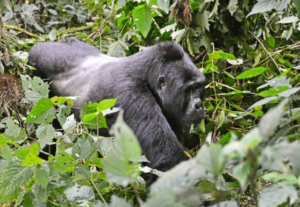
Mountain gorillas live only in the Virunga Massif and in Uganda’s Bwindi Impenetrable Forest. Visitors can trek to them in:
- Uganda: Bwindi Impenetrable National Park and Mgahinga Gorilla National Park
- Rwanda: Volcanoes National Park
A standard permit gives you one hour with a habituated family. Success rates are exceptional: trekkers see gorillas on roughly 95% to 99% of treks. The minimum age is 15 in both Uganda and Rwanda. dumaexplorerdumaexplorer
Eastern Chimpanzees
Chimpanzee tracking is available in several countries:
- Uganda: Kibale National Park, Kyambura Gorge and Budongo Forest
- Rwanda: Nyungwe National Park and, on a smaller scale, Gishwati-Mukura
- Tanzania: Mahale Mountains and Gombe Stream National Parks, on the shores of Lake Tanganyika
Chimpanzee encounters are more variable than gorilla treks because the animals move quickly and cover large areas. That unpredictability is part of the appeal.
Other Primates Worth Seeing
Great apes get the headlines, but East Africa’s other primates are rewarding in their own right.
- Golden monkeys: Endangered, orange-gold monkeys found in the bamboo forests of the Virunga volcanoes in Rwanda and Uganda. They are lively, photogenic and easier to track than gorillas.
- Colobus monkeys: Black-and-white colobus appear in Kibale, Nyungwe and many Kenyan forests, and Nyungwe is known for very large troops of Angolan colobus.
- L’Hoest’s, blue and red-tailed monkeys: Common in Uganda’s forests and often seen on walks.
- Olive and yellow baboons: Widespread across savanna parks in Kenya, Tanzania and Uganda.
- Vervet monkeys: Familiar in lodges and camps across the region.
- Bushbabies (galagos): Nocturnal primates you may spot on night drives or walks.
- Kenya’s coastal and highland species: Sykes’ monkeys, Angolan colobus on the Diani coast and the endangered Tana River primates, for travelers who want a coast-and-forest mix.
Country-by-Country Guide
Uganda: The Primate Capital
Uganda offers the widest range of primate experiences. Bwindi and Mgahinga provide gorillas, while Kibale is among the world’s best places to track chimpanzees. Uganda also offers a gorilla habituation experience at US$1,500 per person, allowing up to four hours with a gorilla family still being habituated. africansafaris
Uganda is also usually the best value for gorillas. A standard permit costs $800 in high season, or $600 in the low-season months of April, May and November. Tariffs are revised periodically, so check for updates. dumaexplorer
Rwanda: Compact and Polished
Rwanda packs gorillas, golden monkeys, chimpanzees and colobus monkeys into a small area with good infrastructure. Volcanoes National Park is roughly two hours from Kigali, which makes quick gorilla trips possible. A permit costs USD $1,500 per person, and treks last between 90 minutes and 6 hours. Nyungwe adds chimpanzees and a canopy walkway for a second primate chapter. dumaexplorerdumaexplorer
Tanzania: Remote Chimpanzees
Tanzania is better known for the Serengeti and the Great Migration, but its western parks are a hidden gem for primates. Mahale Mountains and Gombe Stream offer chimpanzee tracking in remote lakeshore forests, reached by light aircraft and boat. Gombe is also famous as the site of Jane Goodall’s pioneering research. These parks are the right choice if you want a wilderness feel and pair well with a classic Tanzania safari.
Kenya: Monkeys, Baboons and Coast
Kenya has no great apes in the wild, but it offers excellent monkey and baboon viewing in its parks and forests. It also makes a good gateway for regional itineraries, since many travelers combine a Masai Mara safari with a gorilla trip in Uganda or Rwanda.
A Note on the Democratic Republic of Congo
The DRC’s Virunga National Park holds mountain gorillas too, but visitor access has been disrupted by security problems in recent years. Check current government travel advice and park status carefully rather than assuming any trip is possible.
Planning Your Itinerary
The best East Africa primate safaris pair one or two primate destinations with a complementary experience. Some proven formats:
6–7 Days: Rwanda Primates
Kigali, gorilla trekking and golden monkeys in Volcanoes, then chimpanzees and colobus monkeys in Nyungwe. Compact and efficient.
8–10 Days: Uganda Primates and Big Game
Entebbe, Kibale for chimpanzees, Queen Elizabeth for game drives and boat trips, then Bwindi for gorillas. A strong mix of primates and savanna wildlife.
10–12 Days: Uganda and Rwanda
Combine Bwindi and Volcanoes in one trip, adding chimpanzees in Kibale or Nyungwe. The shared border in the Virunga region allows an overland connection.
12–14 Days: Migration and Primates
Combine the Serengeti or Masai Mara with Rwanda or Uganda for gorillas. Midyear (July to October) offers river crossings and drier forest trails, while January to March suits calving season.
Chimpanzee-Focused Journey
Tanzania’s Mahale or Gombe combined with a classic northern circuit safari, for those who want a remote, off-the-beaten-track experience.
Costs: What to Expect
Primate safaris are priced around permits, which are the main fixed cost.
| Experience | Typical Permit Cost (foreign non-resident) |
| Rwanda gorilla trek | $1,500 |
| Uganda gorilla trek | About 800(600 in certain low-season months) |
| Uganda gorilla habituation | $1,500 |
| Chimpanzee tracking | Considerably lower than gorillas, varying by park |
| Golden monkey tracking | Lower-cost permit |
For trip budgets, a 5-day gorilla trekking safari in Uganda can cost between $2,400 and $4,500 per person, depending on the quality of accommodation. Multi-country itineraries, luxury lodges and domestic flights add to the total. kabiraugandasafaris
Beyond permits, budget for accommodation, ground transport and guides, regional flights, visas, travel insurance, vaccinations and tips. Prices and tariffs change, so always request an itemized quote.
Best Time to Go
Primates live in forests and can be seen throughout the year. No single month guarantees a better gorilla encounter, so your timing can follow your other interests. dumaexplorer
- June to September: The main dry season. Trails are easier, but demand and prices are highest.
- December to February: A second dry spell with generally good conditions.
- March to May and October to November: The wetter months. Expect mud and mist, but fewer visitors, lower rates and, in Uganda, discounted gorilla permits in certain months.
If you are combining primates with the Great Migration, plan around the herds, because gorillas and chimpanzees are available year-round.
Practical Tips
- Book early. Permits are capped each day. Rwanda recommends 3 to 6 months in advance, and popular dates sell out. dumaexplorer
- Prepare physically. Treks involve altitude, steep slopes and mud. Moderate fitness is enough for most people, and porters help.
- Pack for forest conditions. Waterproof boots, long sleeves and trousers, gardening gloves, rain jacket, insect repellent and a camera for low light. Flash is not allowed.
- Protect the animals’ health. Primates are vulnerable to human illnesses. Do not trek if you are unwell, and keep the required distance.
- Check health and entry requirements. Vaccination, malaria prevention and visa rules vary by nationality and change over time.
- Insure your trip. Ensure your policy covers adventure activities and medical evacuation.
- Tip appropriately. Rangers, trackers, porters and camp staff rely on gratuities.
Responsible Primate Tourism
The animals’ wellbeing must come first. Responsible travelers:
- Keep the minimum distance and never touch or feed primates
- Stay quiet and move slowly
- Follow ranger instructions at all times
- Choose operators who employ local staff and invest in communities
- Avoid wildlife products and unethical “encounters” outside regulated parks
Well-run tourism gives local people a stake in the forests. Poorly run tourism can endanger the very animals visitors come to see.
Conclusion
East Africa primate safaris offer a rare combination of intimacy and diversity. Gorillas in Uganda and Rwanda, chimpanzees in Uganda, Rwanda and Tanzania, and an extraordinary supporting cast of monkeys make the region unmatched for primate viewing. By choosing the right countries for your budget and interests, booking permits early and pairing the forests with savanna or beach experiences, you can build a trip that is both emotionally powerful and well-balanced. Travel respectfully, and your visit will help protect these animals for the future.
Key Takeaways
- East Africa offers mountain gorillas, chimpanzees, golden monkeys, colobus monkeys and many more species.
- Uganda has the widest primate variety and lower gorilla permits, Rwanda is compact and convenient, and Tanzania offers remote chimpanzee parks.
- Gorilla permits cost about $800 in Uganda and $1,500 in Rwanda, and rates can change.
- Primates can be seen year-round, with June to September the driest period.
- The minimum age for gorilla trekking is 15, and permits should be booked 3 to 6 months ahead.
- Combine primates with savanna safaris or the Great Migration for a balanced trip.
- Responsible behavior and community-focused operators help protect both animals and people.
Frequently Asked Questions
- Which East African country is best for primate safaris?
Uganda offers the most variety and value, Rwanda is the most convenient, and Tanzania suits remote chimpanzee experiences. Many travelers combine two. - Where can I see mountain gorillas?
In Uganda (Bwindi and Mgahinga) and Rwanda (Volcanoes National Park). - Where can I see chimpanzees?
In Uganda (Kibale, Kyambura Gorge, Budongo), Rwanda (Nyungwe) and Tanzania (Mahale and Gombe). - How much does a primate safari cost?
It depends on the itinerary. Gorilla permits are the main cost, at about $800 in Uganda and $1,500 in Rwanda. A five-day Uganda gorilla trip can range from roughly $2,400 to $4,500 per person depending on accommodation. - How long do you spend with the gorillas?
One hour on a standard permit, and up to four hours on Uganda’s habituation experience. - Is a primate trek physically difficult?
It varies from moderate to strenuous. Gorilla treks can last from about 90 minutes to 6 hours on steep, muddy terrain. Porters are available. - When is the best time to go?
Primates can be seen year-round. June to September and December to February are generally drier, and the wetter months offer lower rates. - Can I combine primates with a regular safari?
Yes. Many itineraries pair forests with parks such as Queen Elizabeth, the Serengeti or the Masai Mara. - Can children join gorilla treks?
No. The minimum age is 15. Other primate activities may have different age rules, so check with your operator. - Is it safe to travel in East Africa for primate tours?
Tourist areas in Uganda, Rwanda and Tanzania are generally well managed. Use a licensed operator and check your government’s current travel advice before booking.
Note: Permit prices, tariffs, visa rules and park access change. Treat the figures here as planning estimates and confirm current details with the relevant park authorities or a licensed operator before booking.
I can also put this into a Word doc or a ready-to-publish web page if you’d like.